The essential takeaway
Understand what wallet funding can and cannot do, what to verify before a Chinese payment, and when a bank or marketplace route may be better.
Why these Chinese payment methods come up
Alipay and WeChat Pay are widely used payment ecosystems in China. Suppliers may prefer a wallet transfer, a platform-integrated checkout or a business bank transfer depending on how they operate. A supplier saying 'send Alipay' does not automatically make the transaction eligible for every foreign wallet.
For Nigerian buyers, the first question is not just where to buy yuan. It is whether the intended recipient and transaction type are supported and whether the chosen method preserves useful order and refund evidence.
Understand wallet eligibility and limits
Account verification, identity documents, funding sources, recipient type and risk checks can affect wallet functions. The amount an individual account can send or receive is not a universal daily limit that can be quoted for everyone. Limits vary over time and by account and payment type.
Before placing a high-value order, ask the supplier which payment rail they accept and check the amount and account status with your provider. Do not split transfers to bypass transaction checks or rely on an unverified stranger's wallet.
Match the transfer to the recipient
Alipay
- Confirm account recipient
- Check transaction eligibility
- Retain reference
WeChat Pay
- Confirm supported transfer
- Verify account and limits
- Retain reference
Bank transfer
- Match company beneficiary
- Confirm bank and invoice
- Compare all fees
Alipay versus WeChat Pay
Alipay may be useful when the seller provides a compatible Alipay account or supported checkout. WeChat Pay may be suitable for approved transfers within its ecosystem. Neither service guarantees buyer protection for every person-to-person transfer.
When a marketplace provides a protected checkout, assess whether leaving that checkout would weaken your refund rights. If a seller pushes you to a new personal recipient despite a business invoice, independently verify the reason and pause before paying.
How to prepare an RMB funding request
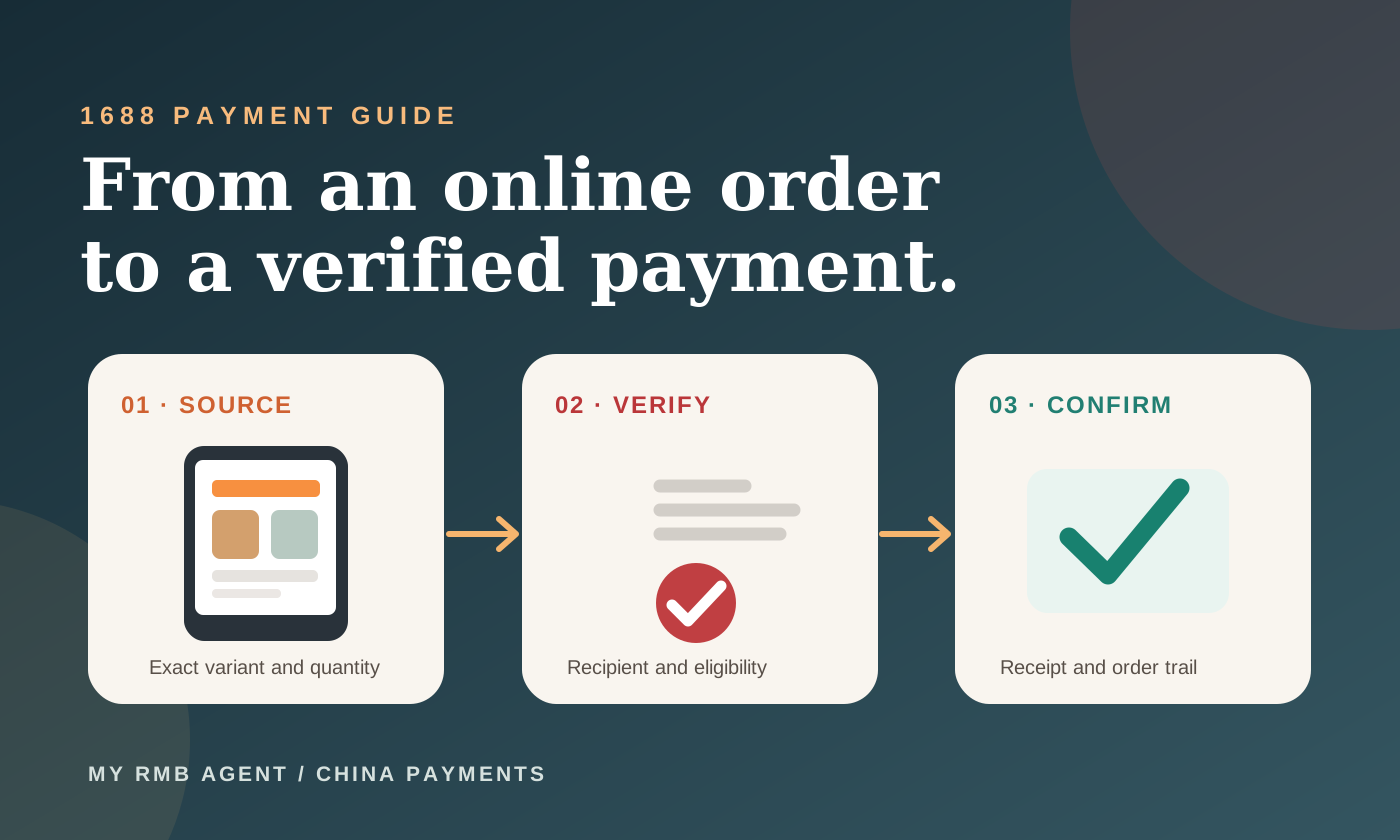
Collect the exact RMB amount, the supplier's legal name, recipient identifiers and any transaction reference. Request a dated invoice for goods; check that the product and quantity match your agreement. Ask for the current Naira quote, fee, delivery window and what evidence you will receive.
MY RMB AGENT supports eligible Alipay/WeChat funding and RMB supplier payments. It is separate from your personal wallet provider and cannot override a platform's identity-verification or payment restrictions.
Five checks before you release funds
Calculate what the Naira amount actually means
For illustration only, ¥2,500 at an assumed ₦210 per yuan is ₦525,000 before applicable fees. The actual conversion you receive will depend on the quoted rate, transaction channel, amount and timing. A price calculator should always display whether service charges are included.
For procurement orders, distinguish currency conversion from the sourcing service fee and from logistics. A quote that shows one all-in number without a clear breakdown is harder to audit or compare.
Avoid preventable payment problems
Confirm a beneficiary through a previously verified channel and double-check copied names, account numbers and QR codes. Beware of edited payment screenshots and sudden recipient changes. Keep your order record, support reference, receipt and supplier confirmation.
If an order fails, freezes or is disputed, contact the relevant service through its official support route; do not repay without confirming the original transaction status.
Practical next step
Take the research into your next order.
MY RMB AGENT reviews supported China product sourcing requests, RMB supplier-payment options and shipping coordination. Share your exact links, variants and delivery preference for a quotation. The standard procurement service fee is 5%; third-party charges are quoted where applicable.
Sources & further reading
Official platforms, regulators and publicly available industry material are linked for independent verification. This article is original educational content, not a reproduction of another publisher's guide.